Resources
Adaptive Management
Adaptive Management is a watershed approach to control phosphorous that allows a point source or a group of point sources funds management measures to reduce the phosphorus load entering a water body. Adaptive Management is a strategy built on partnerships between point source facilities and other landowners, municipalities, private and public entities in order to improve water quality, and eventually achieve compliance with phosphorus water quality standards. Visit the Wisconsin Phosphorus Rules website for more information, including an adaptive management factsheet and webinar and the phosphorus water quality standard implementation guidance document.
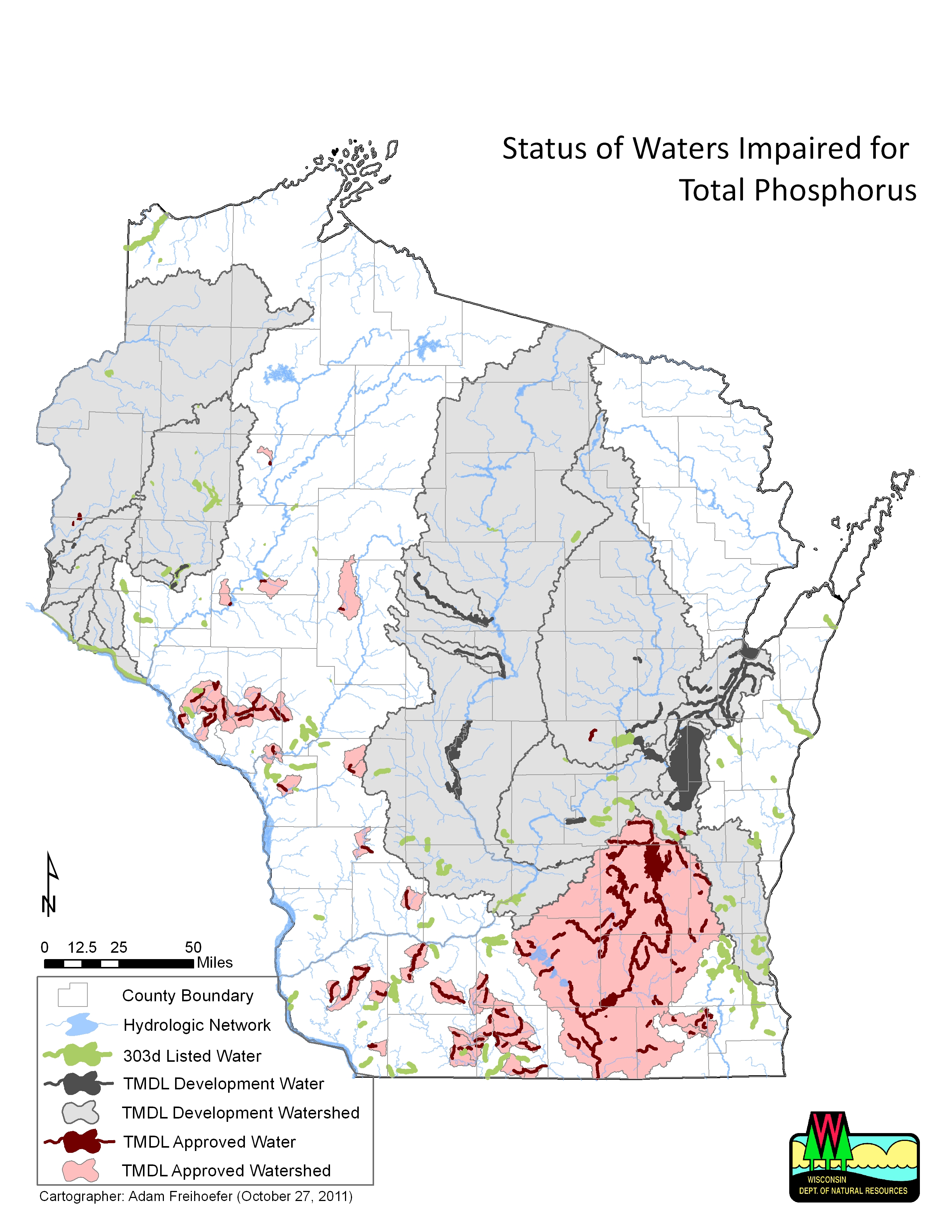
Total Maximum Daily Load (TMDL) Watersheds
Impaired waters in Wisconsin are addressed through an analysis, known as a Total Maximum Daily Load (TMDL). A TMDL is the amount of a pollutant a waterbody can receive and still meet water quality standards . Basically it is a pollution “budget” for a water body or watershed that establishes the pollutant reduction needed from each pollutant source to meet water quality goals.